Ignoring Deposit Limits, Jalwa
A practical guide to ignoring deposit limits for jalwa: the steps, the limits and the common mistakes.
What is ignoring deposit limits?
A deposit limit is a responsible-gaming control that caps the total amount of real money you can add to your Jalwa account within a chosen time window, daily, weekly, or monthly. When a player ignores deposit limits, they either skip setting any cap at all or apply one without reading how it interacts with the rest of the account, including promotional thresholds, withdrawal rules, and the mandatory review period that governs future changes.
On Jalwa, deposit limits are not a passive suggestion. Once a limit is saved, the platform enforces it automatically at the payment stage. Attempts to top up beyond the cap are blocked regardless of which payment method you use. This makes the initial decision more consequential than most players expect, because getting it wrong in either direction has real downstream effects.
Setting a cap too low can disqualify you from bonus tiers that require a minimum deposit above your chosen ceiling. Setting no cap at all removes the safety net that slows impulsive top-ups during a losing streak. Ignoring the limit entirely, meaning never visiting the setting, defaults to whatever the platform's own maximum deposit rules allow, which is far higher than a figure most players would choose for themselves if they thought about it in advance.
The phrase also covers a second behaviour: setting a limit, then immediately requesting an increase without understanding the waiting period that applies. Most regulated platforms, including Jalwa, impose a deliberation window before a higher limit becomes active. Players who forget they ever set a cap discover this delay only when a deposit is declined, at exactly the moment they most want to fund their account.

Ignoring deposit limits safety and timing
The safety logic behind deposit limits is asymmetric by design, and that asymmetry is the most important thing to understand before you ignore the setting. Lowering a limit takes effect immediately. If you decide mid-session that you have spent enough, you can cut your cap right now and the platform will enforce it on the next attempted deposit. Raising a limit does not take effect immediately. There is a mandatory cooling-off period, commonly measured in days or a full week depending on the platform's responsible-gaming policy, before the higher ceiling becomes active.
This deliberate delay exists to protect players from making impulsive top-up decisions under the pressure of a losing session. Regulators in several jurisdictions require it. Jalwa applies this logic to help players stay within budgets they set when their thinking was clearer. Ignoring deposit limits strips away that protection entirely, because a player with no limit has no mechanism to slow themselves down mid-session, every deposit attempt goes straight through.
Timing also matters in the context of your Jalwa account history. Responsible-gaming tools, including deposit limits, are visible to the platform's risk and compliance teams. Accounts that oscillate between very high and very low caps in short windows can attract additional scrutiny. Setting a thoughtful limit early and adjusting it gradually is both safer for your bankroll and less likely to trigger manual account reviews.
If you have already ignored limits and want to restore a sensible ceiling, the correct sequence is: set the new lower cap first (it applies immediately), then allow at least one full billing cycle to pass before evaluating whether any upward adjustment makes sense. Do not request an increase in the same session in which you impose a cap, the deliberation window exists precisely to prevent that loop.
Ignoring deposit limits for new players
New players on Jalwa are the group most likely to ignore deposit limits, and also the group that suffers the most concrete consequences when they do. The reason is the structure of welcome offers. Jalwa's welcome promotion, like those on most real-money gaming platforms, is tiered by deposit size. A larger qualifying deposit unlocks a proportionally larger bonus or a higher match percentage, while a smaller deposit earns a proportionally smaller reward.
The exact figures, percentages, and minimum thresholds are updated from time to time; the current terms are published on the official Jalwa promotions page, which you should read in full before you make any deposit at all.
The conflict arises like this: a new player sets a deposit limit on their first day, perhaps something conservative, without first reading the welcome-offer structure. If their chosen ceiling falls below the threshold for the best bonus tier, they are permanently locked into a smaller reward for the life of that welcome offer. They cannot simply raise the limit and re-deposit to claim the higher tier, because the welcome bonus is typically awarded once and tied to the first qualifying transaction. The cooling-off period makes it impossible to quickly bump the cap in the same session.
To avoid this, new players should follow a two-step sequence before touching any payment setting. First, locate the current welcome-offer terms on Jalwa's promotions section and note the deposit bracket that matches your actual available budget. Second, set your deposit limit at or just above that bracket, not higher, because the limit still serves its protective purpose, but not so far below it that you forfeit the matching bonus tier. This is not about depositing more than you can afford; it is about aligning your responsible-gaming ceiling with a realistic assessment of what you planned to deposit anyway.
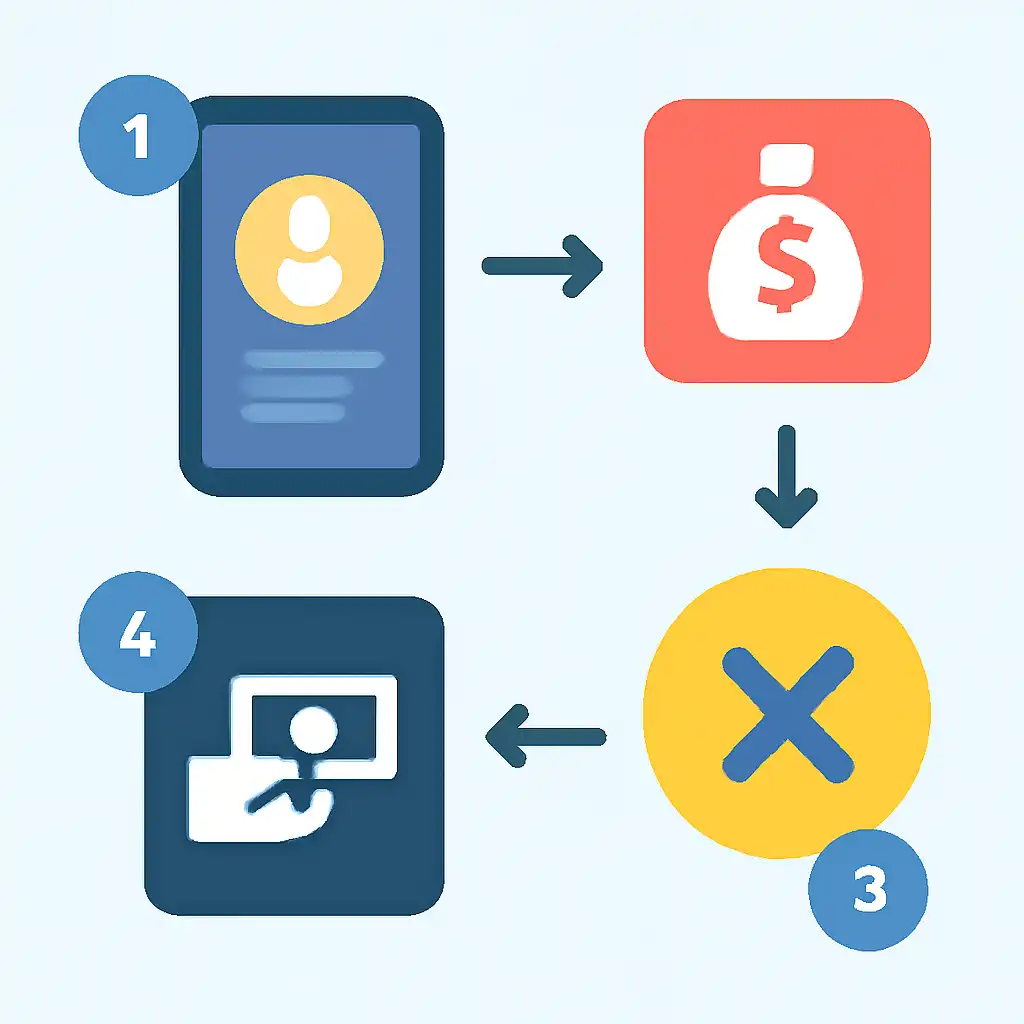
New players should also be aware that some welcome bonus tiers carry wagering requirements that scale with the bonus size. A larger bonus from a higher deposit tier does not automatically mean better value, a higher wagering multiple on a large bonus can be harder to clear than a smaller bonus with gentler conditions. Read the full terms, including the wagering multiplier and the games that contribute to rollover, before deciding which tier to target. This information is stated in plain text within Jalwa's terms and conditions, not in a table or a downloadable document, read the relevant section of the terms page directly.
Ignoring deposit limits step by step
The steps below apply whether you have never set a limit, have set one carelessly, or have set one and now need to reconsider it. Work through them in order rather than skipping ahead.
Step 1, Read the current welcome or active promotion terms first. Before you open any account or payment setting, go to Jalwa's promotions section and read the current offer in full. Note the deposit amounts that define each bonus tier, the wagering requirements attached to each, and any game restrictions on how bonus funds can be used. Do not rely on a third-party summary; read the terms as Jalwa publishes them, because figures and conditions change.
Step 2, Decide your actual budget independently of the bonus. Ask yourself how much real money you are genuinely comfortable depositing this week, setting aside any bonus incentive. Write that figure down. This is your anchor. No promotional tier is worth exceeding it, because a bonus that requires more base funding than you planned is not a bonus, it is an invitation to overspend.
Step 3, Reconcile your budget with the tier structure. Compare your anchor figure to the bonus tiers you noted in Step 1. If your budget falls naturally within the range for a meaningful tier, great, set your deposit limit at that amount or just above it. If your budget falls below all useful tiers, accept the lower reward rather than inflating your budget to chase a bonus. If your budget comfortably covers the highest tier, consider whether the wagering requirements on that tier are realistic given your playing habits before committing.
Step 4, Set the deposit limit before making any deposit. Navigate to Jalwa's responsible-gaming or account-settings section and enter your chosen limit. Select the time period, daily, weekly, or monthly, that best matches how you intend to fund your account. A weekly limit is the most common choice because it maps to a natural spending cycle and gives the cooling-off mechanism enough time to work. Confirm and save the setting.
Step 5, Make your first deposit within the limit you just set. Because the limit is now active, the platform will block any top-up that exceeds your ceiling. This is the mechanism working as intended. If you find yourself frustrated that the limit is preventing a larger deposit, treat that friction as the safety feature it is, not as a technical problem to route around.

Step 6, If you need to adjust the limit later, lower first and raise only after reflection. If your circumstances change and you want to increase your ceiling, submit the request and then wait out the mandatory deliberation period without trying to work around it. Use the waiting time to revisit your budget and confirm the increase is genuinely appropriate. If you want to lower the limit, do so immediately, it takes effect at once. Never request an upward change in the same session as a loss you are trying to recover from; that is precisely the scenario the delay is designed to interrupt.
Step 7, Review your limit periodically, not reactively. Set a calendar reminder, monthly works well, to look at your actual deposit history on Jalwa and compare it to your limit. If you are consistently depositing far below your ceiling, lowering the cap to match your real behaviour adds extra protection at no cost. If you are regularly hitting your ceiling and feeling restricted, examine your playing habits before concluding the limit is the problem.
For the most current responsible-gaming options, including any updates to how deposit limits interact with ongoing promotions, consult Jalwa's official responsible-gaming page and its full terms and conditions directly. Those documents are the authoritative source; any third-party paraphrase, including this page, may not reflect the most recent changes to thresholds, waiting periods, or offer structures.